COST
A luxury worth a key
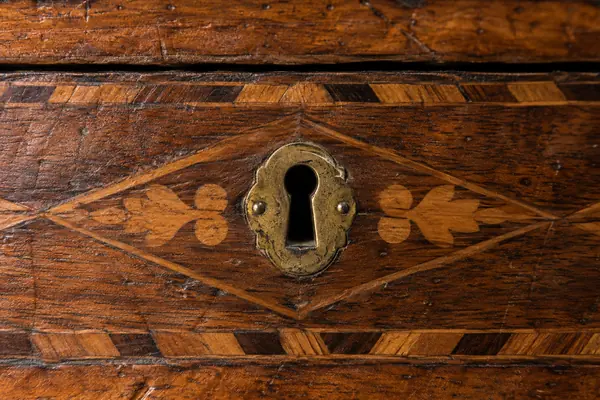
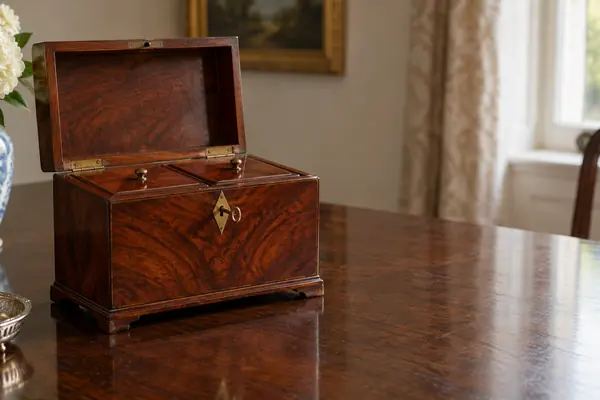
The V&A says tea was initially an expensive luxury confined to the wealthy, so cases and even the canisters inside often had a lock.
Pick a moment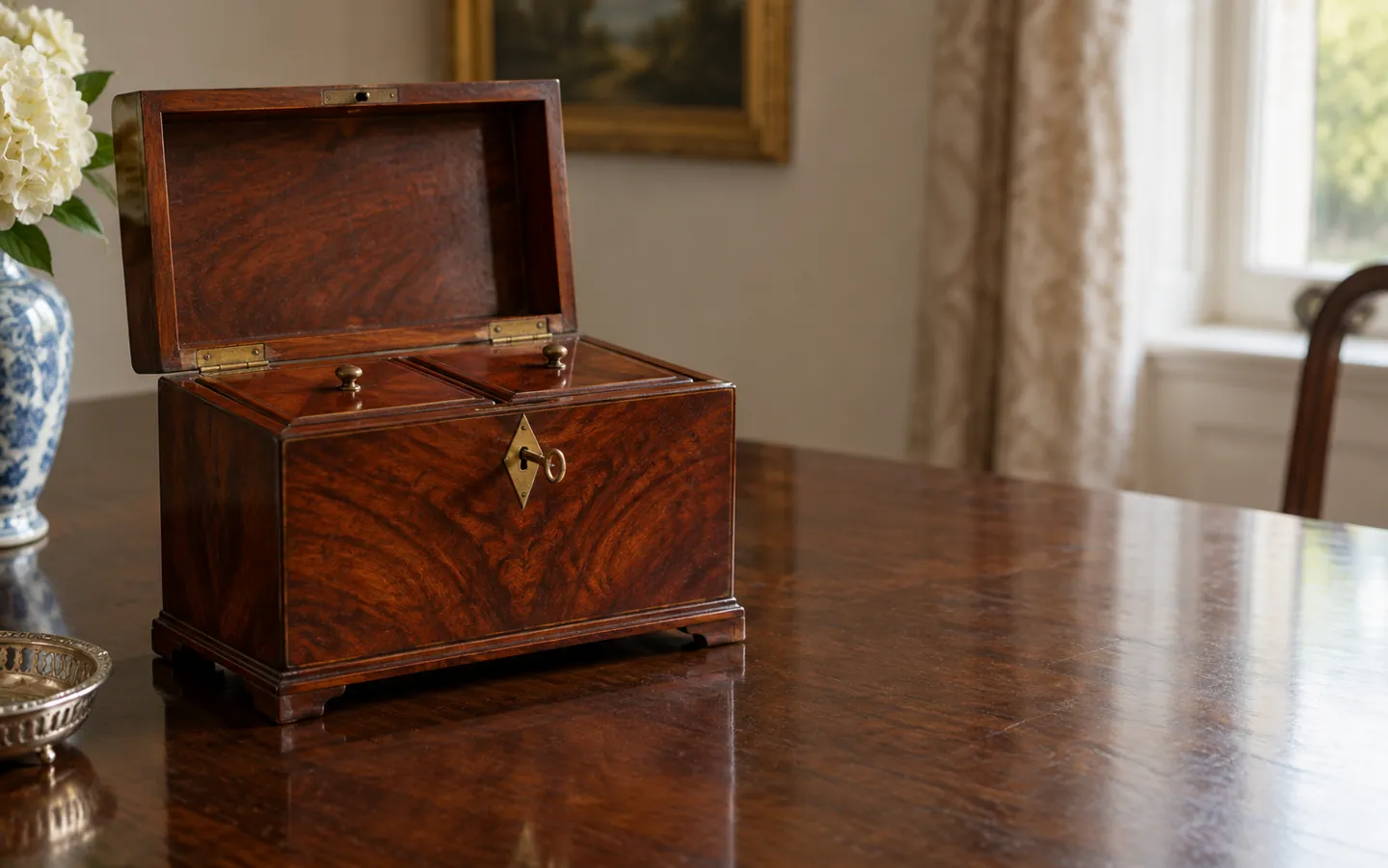
 doodlecaddy
WHAT THE MUSEUMS SAY
LOCKED because tea was precious
The tea caddy was a safe before it was a tin.
In the 1700s tea was costly and heavily taxed, so it was kept in boxes with locks and keys and brought out in front of guests. Museum collections tell the story object by object.
Updated
Pick a momentTHE SHORT ANSWER
Museum records come back to the same reasons:
cost, tax and showing it off at the table.
COST
The V&A says tea was initially an expensive luxury confined to the wealthy, so cases and even the canisters inside often had a lock.
Pick a momentINSIDE
Canisters were often sold in pairs for green and black tea, or in sets of three in a case, with the third and larger one for sugar.
Read a caddyDISPLAY
Tea was made by the lady of the house in front of family and guests, so caddies were often highly decorative.
Why so ornateA QUICK TIME CHECK
Pick a moment in the story of tea in Britain. The bar shows how costly and closely guarded the museum and library records suggest tea was at the time.
Based on object records from the V&A, Museum of the Home and Museum Wales, and a Princeton University Library note on the 1784 Commutation Act.
TWO NUMBERS WORTH KNOWING
One figure on why tea was guarded,
one on where the word caddy comes from.
119%
Tax on tea before the 1784 cut
Tea tax had been raised again and again until it reached 119%. The Commutation Act of 1784 reduced it to 12.5%, effectively ending the smuggling trade.
TEA TAX · PRINCETON UNIVERSITY LIBRARY
≈ ½ kg
The kati, a Malay measure of weight
The V&A says the word caddy is thought to come from the Malay kati, a weight of about half a kilogram, and is now used for all tea containers.
THE WORD · V&A
A Museum of the Home display text says that in the early 1700s a pound of tea could cost the equivalent of a servant's yearly wage, and that the lock stopped servants taking the tea.
FOUR THINGS TO LOOK FOR
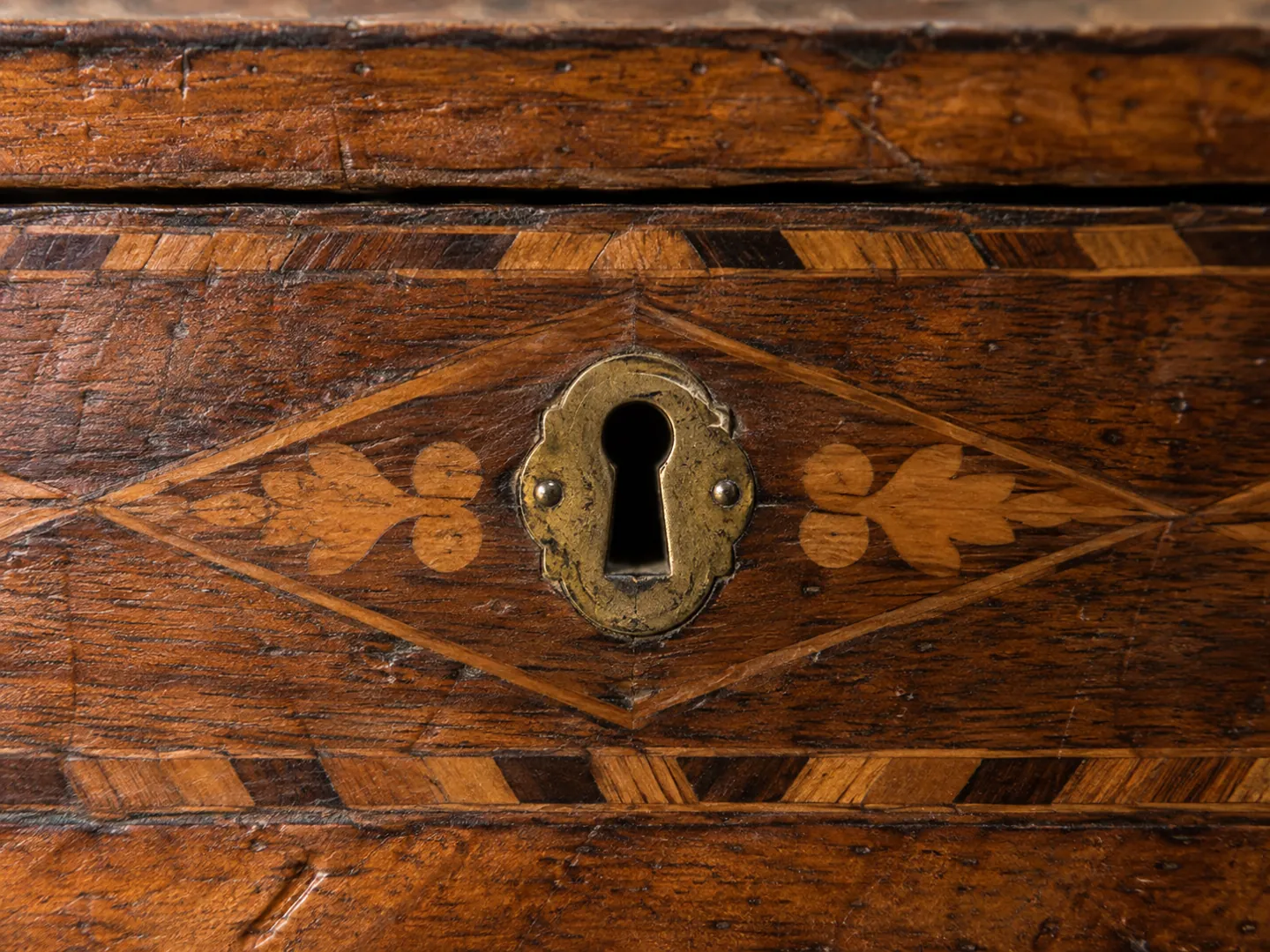
Antique caddies turn up in museums, auctions and family attics. These clues, all drawn from museum records, help you see what one was for.
Look for a keyhole plate on the front. Museum examples have locks on wood, silver and even humble tin-plate caddies.
Two usually means green and black tea. A third, larger container in a set was for sugar.
A plain cube was called a tea tub, modelled on the wooden chests tea was shipped in from China.
Silver, mahogany veneer, inlaid harewood and japanned tin all appear in UK museum collections.
CANISTER, CHEST, CADDY

The V&A explains that early tea containers were called canisters and were kept in locked boxes known as tea chests. Small caddies, boxes with one or two fixed inner compartments, came in from about 1780.
Because the caddy sat on the table while tea was served, it was dressed in the fashion of the day: Neo-classical swags and vases, marquetry in coloured woods, or engraved silver. Today the word caddy covers almost any tea container.
Questions
Tea was expensive. The V&A says it was initially a luxury confined to the wealthy, and a Museum of the Home display says the lock stopped servants taking the precious tea.
The V&A says it is thought to come from the Malay word kati, a measure of weight equal to about half a kilogram. It is now a general term for tea containers.
Silver canisters were often sold in pairs for green and black tea. Sets of three in a case added a larger container for sugar.
Prices fell gradually through the 18th century. The Commutation Act of 1784 cut the tax on tea from 119% to 12.5%, and the V&A says tea was drunk more widely after duties were cut.
In the V&A's account, early containers were canisters kept in locked boxes called tea chests. Small caddies with fixed inner compartments arrived from about 1780.
Sources
ABOUT THIS NAME
doodlecaddy.com is part of the DoodleSale portfolio. It isn't in an auction right now, but you can ask about leasing it.